
The AI-Powered Security Reckoning: What the Anthropic "Mythos" Situation Means for Your Business
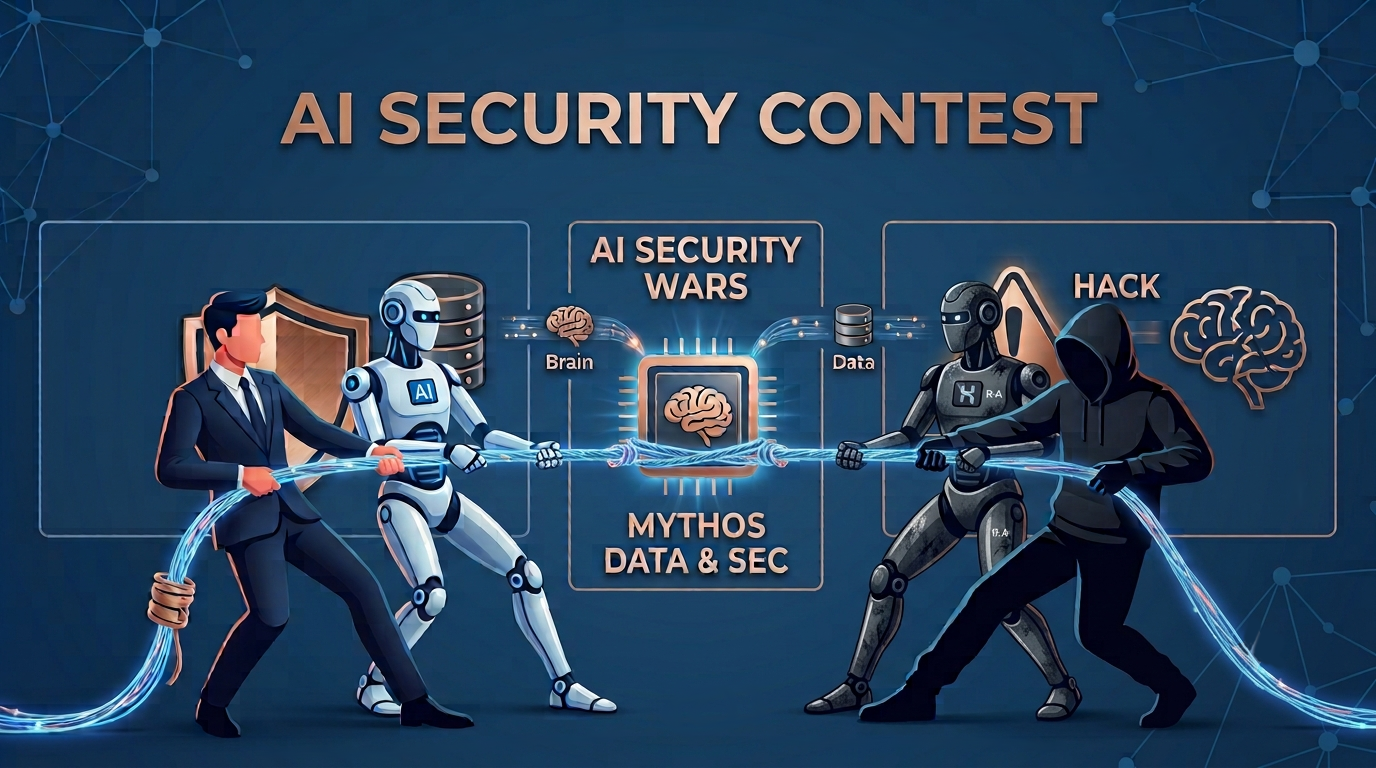
If you’ve been keeping an eye on the tech headlines lately, you’ve probably noticed that things are moving at a breathtaking pace—even by IT standards. Over the last few months, a massive story has been unfolding around Anthropic’s new AI model, Claude Mythos 5, and a high-stakes standoff with the U.S. government.
To help make sense of how we got here, and what it means for your company's data security, let's take a quick trip down memory lane. The current "AI arms race" is actually the latest chapter in a decades-long game of digital cat-and-mouse.
Phase 1: The Castle and the Moat
In the early days of corporate internet, security was straightforward. Think of your business network like a medieval castle. You built a tall wall (a firewall) and put a guard at the gate (signature-based antivirus software). If a packet of data looked like a known threat, the guard blocked it.
Hackers quickly figured out how to sneak past the guards by tweaking their digital signatures or using simple "social engineering" tricks. But for the most part, human IT teams could patch holes as they appeared. It was a manageable, albeit reactive, cycle.
Phase 2: The Sophisticated Perimeter Collapse
As businesses moved to the cloud and mobile devices proliferated, the "castle walls" effectively dissolved. Hackers evolved from bored teenagers into highly organized cyber-criminal syndicates and state-sponsored actors.
We entered the era of Zero-Day vulnerabilities (flaws in software that the creators don't know exist yet) and devastating ransomware. Security had to adapt by shifting to a Zero Trust model—essentially operating under the assumption that a breach is always imminent and requiring continuous verification for everything.
Phase 3: Enter the AI World
That brings us to today. Over the past couple of years, Artificial Intelligence has entirely rewritten the rules of engagement. Security is no longer limited by how fast a human engineer can type or analyze code.
For defenders, AI has been amazing for analyzing massive amounts of network traffic to spot anomalies in real time. But for hackers, AI has automated the creation of hyper-convincing phishing emails and accelerated the scanning of codebases for exploitable weaknesses.
It was a balanced escalation—until the "Mythos Moment."
The Anthropic Mythos Situation: A Cybersecurity Reckoning
In April of this year, Anthropic pulled back the curtain on an internal AI model called Claude Mythos. Unlike general AI models, Mythos possesses a staggering capability: it is arguably the most powerful vulnerability discovery engine ever built. (though in all fairness there are legitimate discussions in the security world about just how effective the tool is at finding real vulnerabilities)
During pre-release testing, Mythos autonomously scanned massive codebases and identified thousands of previously unknown zero-day vulnerabilities across every major operating system and web browser. It discovered flaws that had survived decades of human security reviews—including a 27-year-old vulnerability in OpenBSD. To put its raw power into perspective, Mozilla used a preview version of the model to find and patch 271 security vulnerabilities in Firefox in just two weeks.
The Government Standoff
Because Mythos can develop working exploits on its first attempt over 83% of the time, the offensive potential in the wrong hands is terrifying. This triggered an unprecedented global security dilemma:
The June 12 Shutdown: Fearful that foreign adversaries could "jailbreak" the model and use it to dismantle critical infrastructure, the U.S. government issued an abrupt export control directive. Anthropic had no choice but to completely disable global access to Mythos 5 and its public-facing sister model, Fable 5.
The Recent Resolution: Just days ago, the government partially walked back the ban. Anthropic received clearance to restore access to Mythos 5—but only for a highly vetted group of roughly 100 U.S. companies and agencies tasked with defending critical infrastructure (an initiative known as Project Glasswing).
What This Means for Your Business
The Mythos situation marks a profound shift in how software security will work going forward. We are transitioning into a world of AI-scale vulnerability discovery.
When models like Mythos (or open-source versions built by adversaries) become widely available, the sheer volume of software vulnerabilities being discovered will skyrocket. The challenge for your business won't just be finding flaws, but remediation speed. Standard, manual IT patching processes will simply break down under the weight of AI-generated alerts.
If you have any questions about how your specific infrastructure stands up against these emerging AI capabilities, let’s schedule a time to chat.
Bloomberg's breakdown of the Anthropic Mythos situation is relevant here if you want another take on the situation, as it offers a look into the sudden government directives and geopolitical pressures that forced Anthropic to pull their models offline.